
The shimmering allure of the Golden Globe statuette represents more than just industry acclaim; it signifies a directorial vision so potent it captivated a global audience. For film enthusiasts, the list of Best Director Golden Globes winners is a veritable syllabus for a masterclass in filmmaking. Yet, the joy of discovery is often hampered by the frustrating fragmentation of content across a dizzying array of streaming platforms.
This guide, crafted with a deep understanding of both cinematic art and the digital landscape, serves as your definitive curator. We provide not just a list, but a deep analytical journey into the films that have earned the Golden Globe Award for Best Director, complete with streaming intelligence and a critical examination of the directorial genius that defines each work. Our expertise lies in synthesizing this information, saving you the arduous search and enhancing your viewing experience with rich, authoritative context.
Key Takeaways: Your Cinematic Roadmap
- The Golden Globe for Best Director is a critical benchmark of cinematic excellence, often foreshadowing Oscar® success and always highlighting unparalleled artistic leadership.
- A comprehensive library of these award-winning films is accessible through strategic navigation of major streaming services, digital rental platforms, and specialty channels.
- Appreciating the nuances of a director’s craft—from their approach to narrative structure and visual composition to their guidance of actors—transforms passive watching into active appreciation.
- This article functions as a dynamic, expert-vetted resource, offering both immediate streaming solutions and the deeper contextual knowledge needed to fully understand why these directors were honored.
Table of Contents
Decoding the Prestige: The Cultural and Industry Weight of the Golden Globe for Best Director
The significance of the Golden Globe Award for Best Director extends far beyond the glamour of the ceremony. Bestowed by the Hollywood Foreign Press Association (HFPA), a body of international journalists, this award carries a distinct global perspective. It often recognizes films and directors that resonate across cultural boundaries, making it a unique barometer of worldwide appeal and universal storytelling.
Unlike guild awards, which are voted on by specific industry branches, the Golden Globes reflect a broader journalistic consensus on artistic merit and cultural impact. Winning this award provides a monumental boost to a film’s awards season campaign, generating invaluable media coverage and public awareness. It signals to audiences and academies alike that a director has not only executed a project with technical proficiency but has also infused it with a singular, compelling vision that transcends parochial tastes.
This validation is a powerful force, often propelling smaller, independent films into the mainstream spotlight and cementing the legacies of established auteurs. The award’s history is a tapestry of cinematic evolution, marking shifts in genre popularity, stylistic innovation, and the industry’s growing embrace of diverse voices behind the camera.
The Modern Maestros: A Close-Up on This Decade’s Winning Directors and Their Streamable Masterworks
The past five years have witnessed a remarkable and refreshing transformation in the recipients of the Golden Globe Award for Best Director, highlighting a industry-wide shift towards inclusivity and new storytelling paradigms. This era has celebrated groundbreaking work from female directors, international filmmakers, and veterans who continue to redefine their craft. Christopher Nolan’s 2024 win for Oppenheimer was a triumph of large-scale, practical filmmaking and complex narrative structuring, a testament to his decades-long dedication to cinematic immersion.
Just two years prior, Jane Campion won for The Power of the Dog, a film that showcases a director’s mastery of mood, subtext, and psychological tension, proving the enduring power of slow-burn, character-driven drama. The watershed moment came in 2021 when Chloé Zhao won for Nomadland, a film that blurred the lines between narrative fiction and documentary, using natural light and non-professional actors to achieve a profound sense of verisimilitude.
These directors, though different in style, share a common thread: an uncompromising commitment to their unique vision. Their films are not just stories; they are meticulously crafted worlds that demand to be experienced.
| Director | Film | Year | Primary Streaming Service (US) | Directorial Hallmark |
| Christopher Nolan | Oppenheimer | 2024 | Peacock, Prime Video (Rent/Buy) | Structural Complexity, Practical Scale |
| Steven Spielberg | The Fabelmans | 2023 | Prime Video (Rent/Buy) | Personal Autobiography, Classic Storytelling |
| Jane Campion | The Power of the Dog | 2022 | Netflix | Atmospheric Tension, Psychological Depth |
| Chloé Zhao | Nomadland | 2021 | Hulu, Disney+ | Docu-Fiction Hybrid, Naturalistic Aesthetic |
| Sam Mendes | 1917 | 2020 | Prime Video (Rent/Buy) | “One-Shot” Illusion, Immersive War Experience |
Cinematic Time Capsules: Exploring the Enduring Legacy of 20th Century Golden Globe Best Director Wins
To understand the present landscape of cinema, one must appreciate the foundations laid by the past winners of the Best Director Golden Globes. The 20th century produced a pantheon of directors whose work remains essential viewing, their techniques and stories continuing to influence modern filmmakers.
The films of this era are cinematic time capsules, reflecting the social, political, and artistic moods of their times. The gritty realism of Elia Kazan, a four-time winner for films like On the Waterfront (1954) and East of Eden (1955), introduced a new level of emotional intensity and social commentary to American cinema. The epic grandeur of David Lean, who won for Lawrence of Arabia (1962) and Doctor Zhivago (1965), demonstrated the breathtaking potential of the widescreen format and location shooting to tell sweeping historical narratives.
The rise of the “auteur” in the 1970s was recognized with wins for Francis Ford Coppola (The Godfather Part II, 1974) and Martin Scorsese (Gangs of New York, 2002), whose distinct personal styles and thematic obsessions became the defining characteristic of their work. Streaming these classics offers more than nostalgia; it provides a masterclass in the evolution of film language, from the studio system’s polished productions to the daring innovations of the New Hollywood era.
The Auteur’s Toolkit: Deconstructing the Directorial Techniques That Define a Golden Globe Winner
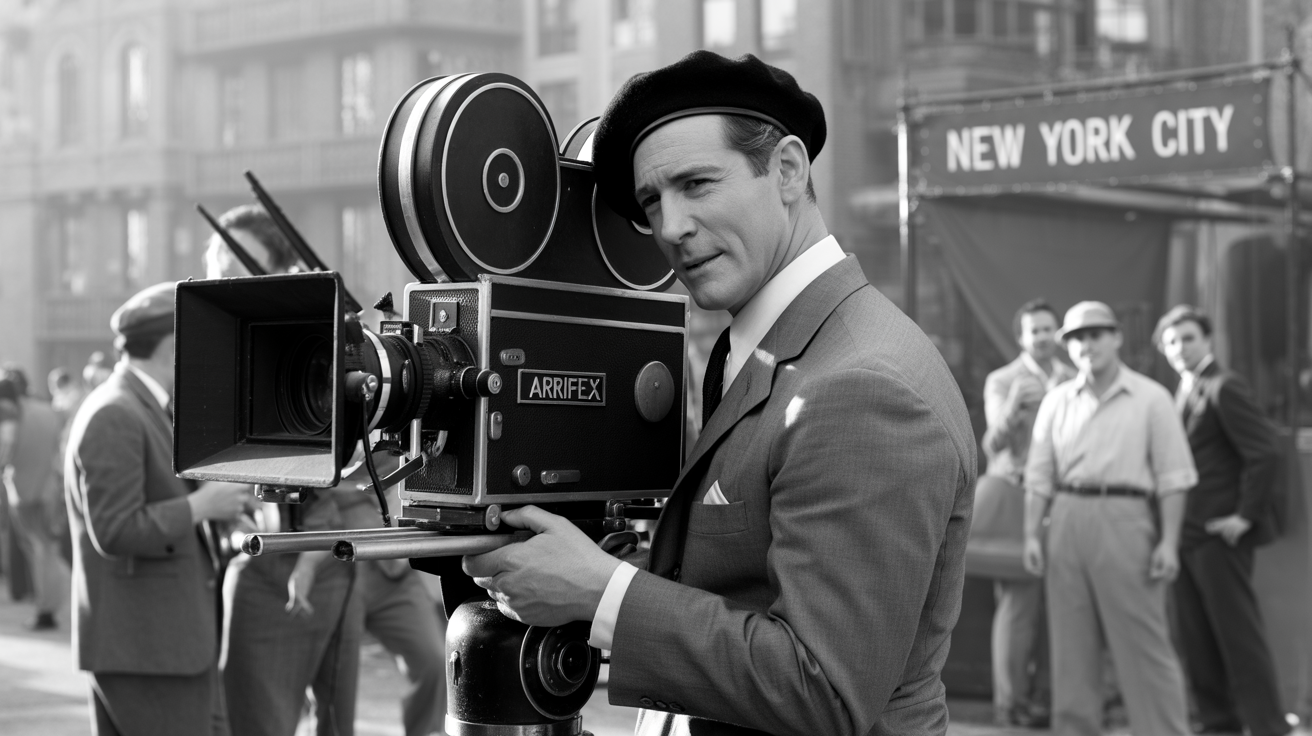
Winning a Golden Globe Award for Best Director is rarely about a single element; it is the culmination of a hundred deliberate choices that coalesce into a singular vision. To truly appreciate these films, one must learn to see and hear like a director. This involves deconstructing the auteur’s toolkit.
Firstly, consider mise-en-scène: the arrangement of everything that appears in the frame—sets, costumes, actors, and lighting. In The Power of the Dog, Jane Campion uses the rugged, imposing landscape of Montana as a central character, its stark beauty mirroring the internal turmoil of her protagonists.
Secondly, analyze camera work. The choice of lens, camera movement, and shot composition tells a story of its own. Alfonso Cuarón’s long, uninterrupted takes in Gravity (2013) and Roma (2018) create an unbroken, immersive experience that plunges the viewer directly into the narrative’s chaos or intimacy.
Thirdly, sound design and score are powerful directorial tools. The absence of a traditional score in large parts of No Country for Old Men (2007, dir. Joel and Ethan Coen) builds unbearable tension through ambient noise, while the relentless, ticking score of Oppenheimer mirrors the protagonist’s racing mind.
Finally, the director’s most crucial tool is working with actors. A director shapes performances, guiding actors to uncover the deepest truths of their characters. The raw, visceral performances in films by Martin Scorsese or Kathryn Bigelow are a direct result of a director who knows how to elicit fearless, authentic work.
The Award Season Prophet: Analyzing the Golden Globes’ Record in Predicting Directorial Oscar® Success
The relationship between the Golden Globes and the Academy Awards is a complex dance of prediction, influence, and occasional divergence. For the category of Best Director, the Golden Globe Award for Best Director has proven to be one of the most reliable Oscar precursors.
This is not mere coincidence; the timing of the Globes ceremony in early January provides a crucial momentum boost for winners, shaping the narrative for the final weeks of Oscar® voting. The HFPA’s international membership can also act as a bellwether for the Academy’s increasingly global voting body.
A statistical analysis of the past two decades reveals a strong correlation. When the awards align, it often signifies a broad consensus on a towering directorial achievement, such as with Chloé Zhao (Nomadland), Guillermo del Toro (The Shape of Water), or Alfonso Cuarón (Gravity). However, the splits are often even more revealing. When the Globes and Oscars® diverge, as with the 2023 win for Steven Spielberg (The Fabelmans) losing to the Daniels (Everything Everywhere All at Once), it highlights differing priorities. The HFPA may favor established masters or grand biographical epics, while the Academy’s directors’ branch might champion bold, genre-defying innovation.
Understanding this dynamic adds a layer of strategic insight to awards season, transforming it from a mere spectacle into a fascinating study of industry politics and artistic validation.
Golden Globe to Oscar Director Win Correlation (2004-2023)
| Year | Golden Globe Winner | Oscar® Winner | Match? | Notes |
| 2023 | Steven Spielberg | Daniels (EEAAO) | No | Academy favored bold new voices over classicism. |
| 2022 | Jane Campion | Jane Campion | Yes | Unanimous choice for a masterful work. |
| 2021 | Chloé Zhao | Chloé Zhao | Yes | Historic win for a visionary filmmaker. |
| 2020 | Sam Mendes | Bong Joon-ho | No | Globes favored technical achievement; Oscars® favored originality. |
| 2019 | Alfonso Cuarón | Alfonso Cuarón | Yes | Sweep for a personal, technical masterpiece. |
| 2018 | Guillermo del Toro | Guillermo del Toro | Yes | Consensus for a director’s passionate vision. |
| 2017 | Damien Chazelle | Damien Chazelle | Yes | Youngest winner for a modern musical triumph. |
| 2016 | Alejandro G. Iñárritu | Alejandro G. Iñárritu | Yes | Consecutive wins for an audacious filmmaker. |
| 2015 | Richard Linklater | Alejandro G. Iñárritu | No | Split between a 12-year experiment and a technical marvel. |
| 2014 | Alfonso Cuarón | Alfonso Cuarón | Yes | Win for groundbreaking visual storytelling. |
Beyond the Podium: Celebrating the Landmark Directors and Films the Golden Globes Overlooked
A complete film education requires studying not only the victors but also the worthy contenders who, for various reasons, were passed over. The history of the Best Director Golden Globes is punctuated by surprising omissions that often look more egregious with the passage of time.
These “snubs” are not failures of the films but rather reflections of the HFPA’s specific tastes, the political climate of the awards season, or simply an overly competitive year. For instance, the fact that Stanley Kubrick, one of the most influential directors in history, never won a competitive Golden Globe for directing (2001: A Space Odyssey, A Clockwork Orange, Barry Lyndon) remains a stunning footnote.
Similarly, the Academy Award-winning director Spike Lee did not receive a Best Director nomination from the Globes for his seminal film Do the Right Thing (1989), a decision that continues to be analyzed and criticized. More recently, Denis Villeneuve’s breathtaking work on Dune (2021) was overlooked in favor of more traditional narratives.
Exploring these films is crucial. It provides a more nuanced and critical understanding of film history, reminding us that awards are a snapshot of a moment’s consensus, not an infallible judgment of quality. These films are often just as streamable and, in many cases, have garnered even greater cultural resonance than the films that beat them.
The Cinephile’s Practical Handbook: Your Dynamic Guide to Finding and Streaming These Films
Knowing what to watch is only half the battle; knowing where to watch is the other. The streaming ecosystem is a dynamic and often frustratingly fragmented marketplace where digital rights are constantly expiring and renewing on different platforms. This guide acts as your living, breathing handbook to navigate this terrain.
The first and most crucial tool is the use of aggregator websites and apps like JustWatch or Reelgood. These services allow you to search for any film and instantly see which streaming service(s) it is currently on, whether it’s included with a subscription, or if it requires a rental or purchase. They also allow you to set up alerts for when a specific film becomes available on a service you subscribe to.
Secondly, understand the tiers of access: Subscription Streaming (Netflix, Max, Hulu), Premium Add-Ons (Channels via Prime/Apple), Digital Rental/Purchase (Apple TV, YouTube, Vudu), and Free with Ads (Tubi, Pluto TV). Many classic films from the Golden Globe winners list cycle through free ad-supported services.
Thirdly, don’t neglect the library. Services like Kanopy and Hoopla, which are free with a library card, offer a stunning array of classic and independent cinema, including many Criterion Collection titles that feature past winners.
From Audience to Auteurist: Cultivating a Deeper Appreciation for the Director’s Craft
Moving from a passive viewer to an active “auteurist”—a viewer who seeks out and analyzes films based on the director’s authorial voice—is an immensely rewarding journey. It transforms watching movies from a pastime into a passion. This transformation begins with intentional viewing.
After streaming a film that won the Golden Globe Award for Best Director, take ten minutes to research its director. Read about their background, their recurring themes, and their stylistic trademarks. Then, seek out another film from their filmography. Notice the connections. Do they frequently collaborate with the same cinematographer or composer? Do they revisit certain story types or character archetypes?
For example, after watching Christopher Nolan’s Oppenheimer, you might stream Memento to see his early experimentation with non-linear storytelling. After experiencing the quiet power of Chloé Zhao’s Nomadland, you could seek out her earlier film The Rider to see the evolution of her docu-fiction style.
This method of film exploration, guided by the director’s vision rather than just genre or star, opens up a new dimension of understanding. You begin to see the person behind the camera, making each film not an isolated story, but a chapter in an ongoing artistic conversation.
Conclusion
The path of a Golden Globe Award for Best Director winner is a journey through the heart of cinematic excellence. From the epic visions of Hollywood’s golden age to the intimate, groundbreaking narratives of today, these films represent the pinnacle of directorial achievement.
This guide has equipped you with more than just a watchlist; it has provided the context, tools, and critical framework to deeply appreciate the art behind the award. The digital world has made these masterpieces more accessible than ever before. Your curated film festival awaits.
Frequently Asked Questions
Who has won the most Golden Globe Awards for Best Director?
The legendary Elia Kazan holds the record with four wins for Gentleman’s Agreement (1947), A Streetcar Named Desire (1951), On the Waterfront (1954), and East of Eden (1955). His work with actors and his forceful, realistic style defined a generation of American filmmaking.
Has a female director ever won the Golden Globe Award for Best Director?
Yes, though historically underrepresented, three women have broken this barrier. Barbra Streisand was the first, winning for Yentl in 1984. Over three decades later, Chloé Zhao won for Nomadland (2021), and Jane Campion won for The Power of the Dog (2022), signaling a significant and welcome shift in the industry.
What is the difference between the Best Director and Best Picture Golden Globes?
Best Picture is an award for the film as a complete production entity, recognizing the collective achievement of producers, directors, writers, actors, and crew. Best Director is a specific award honoring the individual artistic vision and leadership of the person who guided the entire process. While the same film often wins both, they can split, acknowledging that a well-produced film (Best Picture) might have been helmed by a different director than the one voted best of the year.
Do Golden Globe winners get a prize?
Yes, winners receive the iconic Golden Globe statuette. The statuette is made of brass, plated in 24-karat gold, and features a globe encircled by a strip of film, mounted on a marble pedestal.
How does the Hollywood Foreign Press Association (HFPA) choose the winner?
The winner is selected by a simple majority vote of the then-members of the HFPA. This group consisted of international journalists based in Southern California who reported on the American entertainment industry for publications outside the United States. Recent organizational changes have expanded and diversified the voting body.
Can I watch the Golden Globe Awards ceremony online?
Yes. The ceremony is broadcast live on television (currently on CBS) and is simultaneously streamed live on Paramount+ and other CBS-affiliated streaming platforms. Specific digital rights can vary year to year.

Robert Martin is a passionate blogger and versatile content creator exploring the intersections of personal finance, technology, lifestyle, and culture. With a strong background in financial literacy and entrepreneurship, he helps readers make smarter money moves, build sustainable side hustles, and achieve financial independence.
Beyond finance, Robert shares his insights on home decor and gardening—offering practical ideas for creating beautiful, functional living spaces that inspire comfort and creativity. He also dives into the dynamic worlds of sports and celebrity news, blending entertainment with thoughtful commentary on trends that shape today’s pop culture.
From decoding the latest fintech innovations to spotlighting everyday success stories, Robert delivers content that’s informative, relatable, and actionable. His mission is to empower readers to live well-rounded, financially confident lives while staying inspired, informed, and ahead of the curve.