In the ever-evolving world of game development, choosing the best game dev languages can be the difference between a stalled project and fast, productive progress. With countless options available, developers—whether they’re aspiring students, indie creators, or hobbyists—often feel overwhelmed by the complexity and sheer volume of choices. The right programming language can dramatically reduce your learning curve and give you the tools to turn your game ideas into reality faster.
Programming for game development is a unique discipline. It’s not just about writing lines of code but weaving together physics, graphics, audio, and interactivity into a seamless experience. The languages used for this purpose need to be versatile, efficient, and supported by rich ecosystems. This article dives into the most effective programming languages for game development, emphasizing which ones yield fast, tangible results, so you can spend less time stuck in tutorials and more time building.
Key Takeaways
- C# and C++ dominate the professional and indie scene because of their performance and powerful ecosystems.
- Scripting languages like Python and Lua provide excellent pathways for beginners and rapid prototyping.
- JavaScript powers accessible browser-based games and is a strong contender for mobile-friendly game dev.
- Selecting a game language is best guided by your project scope, platform, and how quickly you want to see results.
- Strong community support and comprehensive learning resources are vital for rapid progress and troubleshooting.
Table of Contents
What Makes a Game Language the “Best” for Fast Results?
When aspiring developers ask what the best game dev languages are, the answer depends on more than popularity. The best language is one that aligns with your learning style, project ambitions, and available resources. Here are the critical factors that determine if a game language will get you to fast results:
Ease of Learning
A language with intuitive syntax, clear documentation, and plenty of tutorials will accelerate your learning curve. Beginners often find languages like Python or C# easier to grasp compared to the more syntactically demanding C++.
Performance and Efficiency
Games require speed—whether it’s rendering graphics, handling AI, or processing physics. Languages that compile to fast machine code (like C++ and C#) give you a performance edge, especially for 3D or multiplayer games.
Community and Ecosystem
A vibrant community means access to plugins, tutorials, forums, and quick answers to problems. For example, the Unity community for C# developers is massive and incredibly supportive, offering countless resources that shave weeks off learning time.
Cross-Platform Support
Languages supported by major engines like Unity and Unreal allow you to build games that run on consoles, PCs, and mobile devices without rewriting large parts of your codebase.
Industry Relevance
Languages widely used in the industry open doors to collaboration, employment, and future learning opportunities. Knowing C++ or C# can make you job-ready for studios, while Python or Lua can set you up for niche roles in prototyping or scripting.
All these factors combined influence how quickly and effectively you can transform your game ideas into playable projects.
C#: The Ideal Blend of Power and Accessibility
C# has emerged as one of the top choices for game development, especially for beginners and indie developers aiming for rapid results. This language’s integration with the Unity engine—arguably the most popular game engine globally—makes it a powerhouse for fast game creation.
Unity’s interface abstracts much of the complexity, allowing developers to focus on gameplay logic using C#. This managed language combines object-oriented programming principles with a straightforward syntax, making it both powerful and approachable. Developers can leverage Unity’s extensive asset store and online tutorials to accelerate development.
A real-world example that showcases C#’s strength is the indie hit Hollow Knight. Created with Unity, the developers were able to deliver a highly polished, complex 2D Metroidvania-style game while iterating quickly through C# scripts.
Another benefit of C# is its ability to target multiple platforms seamlessly. Whether you want to deploy on PC, consoles, or mobile devices, Unity and C# simplify this process without the need to rewrite your core logic.
The vibrant C# and Unity communities are a goldmine for newcomers. From beginner forums to advanced optimization tips, developers at all levels can find support, sample projects, and plugins to speed up their work.
For anyone wanting to combine ease of learning with professional-grade results, C# stands as an unbeatable option.
C++: The Industry Standard for High-Performance Games
C++ is the undisputed language when it comes to high-performance game development. This language offers unparalleled control over hardware and system resources, making it indispensable for AAA studios and developers creating graphically intensive, complex games.
Unreal Engine, one of the two most prominent game engines alongside Unity, is built primarily with C++. Epic Games’ Fortnite exemplifies what can be achieved with C++—a massive, multiplayer game with high-fidelity graphics running smoothly on various platforms.
C++’s complexity is a double-edged sword. Its steep learning curve and intricate syntax mean that beginners may find it daunting. However, the payoff is tremendous. Knowing C++ unlocks the ability to optimize performance at a granular level and implement features impossible in higher-level languages.
Memory management is another critical aspect. Unlike managed languages like C#, C++ requires developers to handle allocation and deallocation of memory themselves. This demands precision but offers better performance when done correctly.
Professional game developers often recommend learning C++ if you plan to work on AAA titles or deeply customize your engine. Many university courses and game dev bootcamps emphasize C++ for this reason.
Comparison of C++ and C# for Game Development
| Feature | C++ | C# |
| Learning Curve | Steep | Moderate |
| Performance | Very High | High |
| Memory Management | Manual (complex) | Automatic (garbage-collected) |
| Industry Usage | AAA titles, Unreal Engine | Indie, mobile, Unity-based games |
| Community Support | Large but advanced | Large and beginner-friendly |
Python and JavaScript: Rapid Prototyping and Web Games
Python and JavaScript shine when you want to get something up and running quickly without wrestling with low-level complexities. These languages are excellent for indie developers, students, and hobbyists who want immediate feedback and easy iteration.
Python’s simplicity is legendary. With libraries like Pygame, developers can create simple 2D games rapidly. Python’s syntax is readable and forgiving, making it a great teaching language and prototyping tool. For instance, many game jams and student projects rely on Python to experiment with ideas before scaling them up.
JavaScript’s strength lies in its ubiquity—every modern web browser runs it. This makes it ideal for web-based games accessible on virtually any device without installation. Frameworks like Phaser and Babylon.js have empowered developers to build impressive browser games that rival native apps in polish and functionality.
While these languages don’t match the performance of C++ or C#, their speed of learning and deployment is unmatched. For developers focused on quick proofs of concept, prototypes, or casual games, Python and JavaScript provide an unbeatable starting point.
Both languages have enormous communities and countless tutorials, which further accelerates learning and problem-solving.
Lua: The Lightweight Scripting Hero
Lua is a lightweight, embeddable scripting language widely used for in-game scripting, modding, and customization. Unlike the full-scale development languages discussed previously, Lua is often integrated into game engines to provide flexible, real-time game behavior control.
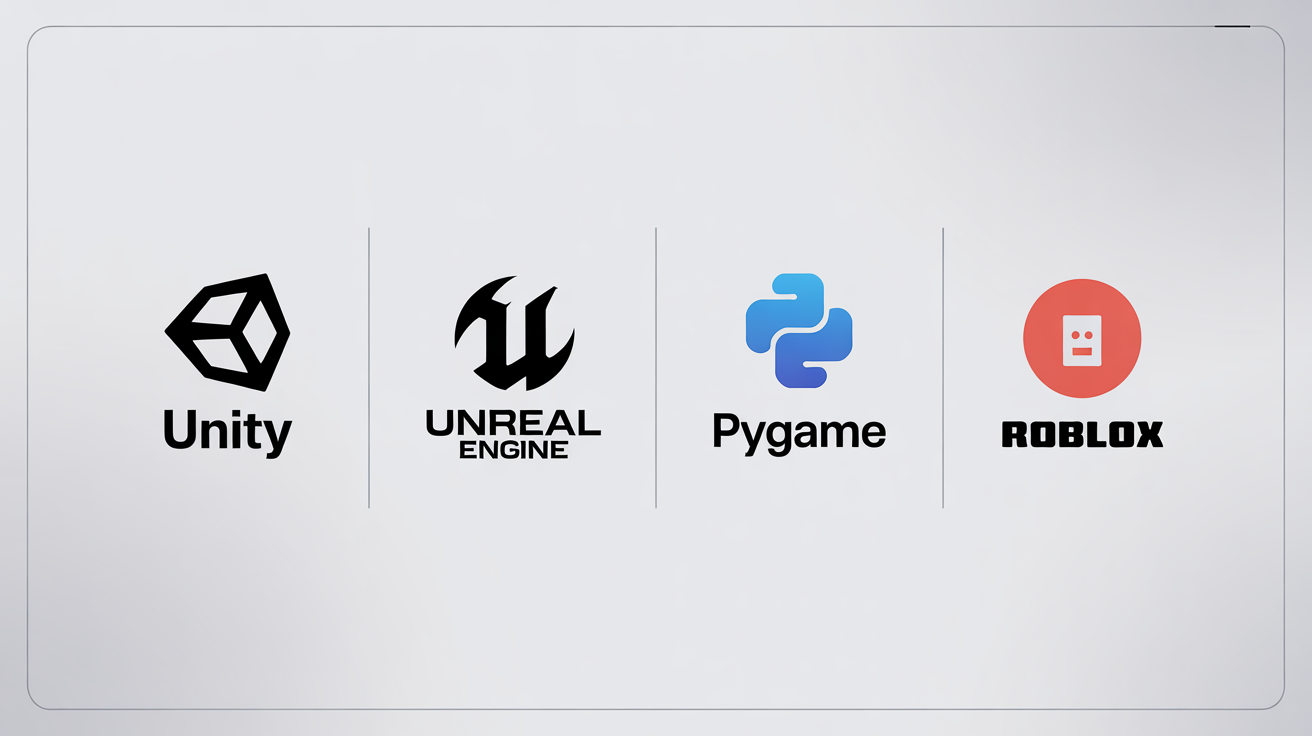
Popular games like World of Warcraft and platforms like Roblox utilize Lua extensively. It allows modders and developers to write scripts that change gameplay dynamics without touching the core game engine.
Lua’s syntax is simple and approachable, making it accessible even to non-programmers who want to add custom content or scripts to their favorite games. It’s especially valued in development environments where speed of iteration and flexibility are critical.
Though Lua isn’t generally used for building entire games from scratch, its role as a scripting language is invaluable. It accelerates development by allowing fast testing of gameplay features, AI behavior, and event-driven programming without recompilation.
How to Choose the Right Game Language for Your Project
Choosing the right programming language is not a one-size-fits-all decision. It requires matching your game’s scope, platform, and your personal learning preferences.
If your goal is a simple 2D game or rapid prototyping, Python or Lua might be ideal due to their simplicity and fast iteration times. For browser or mobile games, JavaScript offers wide reach and ease of deployment.
For 3D games with professional aspirations, C# (via Unity) or C++ (via Unreal Engine) provide the necessary power and scalability. Consider your comfort with complex syntax and the learning resources available.
Your background also matters. If you already know JavaScript, starting with Phaser might help you build confidence fast. If you have some object-oriented programming experience, C# could be a smoother entry.
Community engagement is crucial. Languages tied to active forums, asset stores, and tutorials can accelerate your learning curve and problem-solving.
By carefully evaluating these factors, you’ll position yourself for fast, meaningful progress in game development.
Use Cases and Success Stories
Understanding real-world applications brings these languages to life. For example, the team behind Cuphead used C++ to leverage custom game engines and achieve the vintage animation style with smooth performance.
Celeste, an indie darling, was developed in C# with Unity, demonstrating that small teams can create critically acclaimed games quickly with the right tools.
Python is often the choice in educational environments and rapid prototyping. Game jams frequently feature games built in Python due to its simplicity.
Lua’s scripting power is evident in Roblox, which supports millions of user-generated games and experiences created through Lua scripts.
These examples highlight that while some languages demand steep learning, their real-world power and flexibility make the investment worthwhile.
Key Resources and Learning Platforms for Game Dev Languages
To fast-track your game development journey, leveraging quality resources is paramount.
For C# and Unity:
Unity Learn offers free tutorials and projects from beginner to advanced. The Unity Asset Store provides ready-made assets, cutting down development time.
For C++ and Unreal:
Epic Games’ Unreal Online Learning provides structured courses, and forums are active with professionals sharing knowledge.
For Python and JavaScript:
Sites like Codecademy, freeCodeCamp, and Pygame’s official docs offer beginner-friendly guides and projects.
For Lua:
The official Lua website hosts documentation, while Roblox Developer Hub provides tutorials specific to game scripting.
Selecting curated learning paths matched to your language choice will keep your progress steady and productive.
Common Misconceptions About Game Programming Languages
Many new developers believe that one language is universally “best” or that mastering multiple languages at once is necessary. The truth is more nuanced.
No single language excels in all aspects. While C++ offers performance, it can slow beginners. Python is accessible but not ideal for high-end games. Choosing the right language for your current goals is more productive than chasing the “best.”
Another misconception is that game engines limit language choice. While Unity favors C# and Unreal prefers C++, many engines are evolving to support multiple scripting languages, widening options.
Understanding these subtleties helps avoid frustration and unrealistic expectations, letting you focus on learning and creating.
Future Trends in Game Language and Programming for Game Development
The game development landscape constantly evolves. New languages and tools emerge, and existing ones adapt to new hardware and platforms.
Languages like Rust are gaining attention for game development due to their performance and safety features. Engines are increasingly supporting visual scripting to lower barriers further.
Cloud gaming and multiplayer architectures are pushing languages and engines to handle distributed computing and real-time data efficiently.
Keeping an eye on these trends, while mastering proven languages like C# and C++, ensures you stay competitive and ready for the future of game development.
Conclusion
The journey to mastering the best game dev languages begins with choosing the right language tailored to your goals, learning pace, and project requirements. C# and C++ offer deep industry-standard capabilities, while Python, JavaScript, and Lua open doors for fast prototyping and indie success.
Real-world successes show that no matter which language you choose, combining it with the right tools, community, and mindset will help you achieve fast, tangible results. Start building today and bring your game ideas to life.
Frequently Asked Questions
What is the best game language for beginners?
C# and Python are great for beginners due to easy syntax and supportive communities. Unity’s C# ecosystem particularly helps newcomers create professional-quality games quickly.
How important is programming for game development?
Programming is the backbone of game development, controlling game mechanics, AI, rendering, and interaction. Without it, game creation wouldn’t be possible.
Which game language has the strongest community support?
C# (Unity) and C++ (Unreal Engine) communities are the largest and most active, providing extensive learning resources and forums.
Can I switch programming languages easily in game development?
While programming fundamentals transfer, switching languages involves adapting to different syntax and engine workflows. Gradual transition is advisable.
What game languages are best for mobile games?
C# with Unity and JavaScript for web-based mobile games are popular due to cross-platform compatibility and ease of use.
How to learn programming for game development quickly?
Focus on one language, utilize game engines, follow structured tutorials, join active communities, and practice by building small projects.

Robert Martin is a passionate blogger and versatile content creator exploring the intersections of personal finance, technology, lifestyle, and culture. With a strong background in financial literacy and entrepreneurship, he helps readers make smarter money moves, build sustainable side hustles, and achieve financial independence.
Beyond finance, Robert shares his insights on home decor and gardening—offering practical ideas for creating beautiful, functional living spaces that inspire comfort and creativity. He also dives into the dynamic worlds of sports and celebrity news, blending entertainment with thoughtful commentary on trends that shape today’s pop culture.
From decoding the latest fintech innovations to spotlighting everyday success stories, Robert delivers content that’s informative, relatable, and actionable. His mission is to empower readers to live well-rounded, financially confident lives while staying inspired, informed, and ahead of the curve.