Introduction to Claude Prompts: Unlocking AI’s Full Potential
The world of AI is rapidly evolving, and users—whether they are content creators, developers, or business professionals—are continuously seeking ways to maximize AI’s usefulness. One key factor that determines the quality of AI output is the prompts given to the system. When it comes to Anthropic’s Claude, claude prompts are the primary tool for steering AI responses toward relevance, creativity, and precision. Simply put, Claude prompts are carefully crafted instructions that direct the AI’s behavior, tone, and output type.
Without the right prompts, even the most advanced AI can produce irrelevant or generic answers. This is a common frustration among users who want personalized and high-quality results but find themselves stuck with unhelpful responses. The challenge is compounded by a lack of accessible prompt variety and insufficient customization options. This leads to wasted time and diminished productivity.
By understanding and utilizing top Claude prompts, users can unlock smarter AI outputs that align closely with their specific goals. Whether you’re writing a blog post, automating customer service, or analyzing data, mastering Claude prompts will transform your AI interactions from guesswork to precision-driven performance.
Real-world example: A leading digital marketing agency reported a 40% reduction in content creation time after implementing a structured set of Claude prompts to generate draft articles. This efficiency gain underscores the power of well-designed prompts to enhance workflow and output quality.
Key Takeaways
Before diving deeper, here are the key points to remember about Claude prompts and their impact on AI outputs:
These points create a framework for approaching Claude prompts strategically, helping you optimize your AI interactions from day one.
Table of Contents
Understanding Claude AI Prompts: Foundations and Functionality
To harness the true power of Claude prompts, it’s essential to understand their foundation and how they work behind the scenes. At its core, a Claude prompt is more than just a question or instruction; it’s a carefully structured command designed to tap into the AI’s vast knowledge and linguistic ability.
Claude AI operates on an advanced language model architecture developed by Anthropic, which is built with safety and context-awareness in mind. The model doesn’t just respond to keywords—it interprets the entire prompt’s meaning, tone, and intent. This is why prompt precision is critical.
When you provide a prompt, you effectively set the parameters for what the AI prioritizes. For example, a prompt instructing Claude to “Write a concise summary of this technical report emphasizing actionable insights” will yield a very different result than simply asking for “a summary.” The former guides the AI to focus on specific output qualities, enhancing relevance and usability.
Real-world use case: In a financial services firm, Claude prompts tailored for summarizing quarterly reports helped analysts reduce manual synthesis time by 60%, enabling faster decision-making based on AI-generated executive summaries.
Another important aspect is prompt layering—where multiple instructions are combined in a single prompt to achieve complex tasks. For instance, a prompt might instruct Claude to analyze sentiment, summarize key points, and generate follow-up questions all at once. This layered prompting is particularly useful in customer service and data analysis domains.
The interplay of prompt detail, context, and expected output style makes Claude AI prompts a powerful tool for users aiming to optimize AI interactions.
Top Claude Prompts Categories to Boost Your Workflow
Claude prompts come in diverse categories, each tailored to specific types of tasks and industries. Recognizing which category fits your needs helps in selecting or crafting the most effective prompts. Here’s an overview of the major categories and how they contribute to smarter AI outputs:
Each category requires a different prompt approach. For example, creative prompts encourage open-ended, allowing the AI to explore ideas freely. In contrast, technical prompts need specificity to avoid ambiguity and errors.
By segmenting prompts into categories, users can better tailor their inputs, making AI outputs more targeted and valuable. Many prompt libraries and generators allow users to filter or select prompts based on these categories, further streamlining the process.
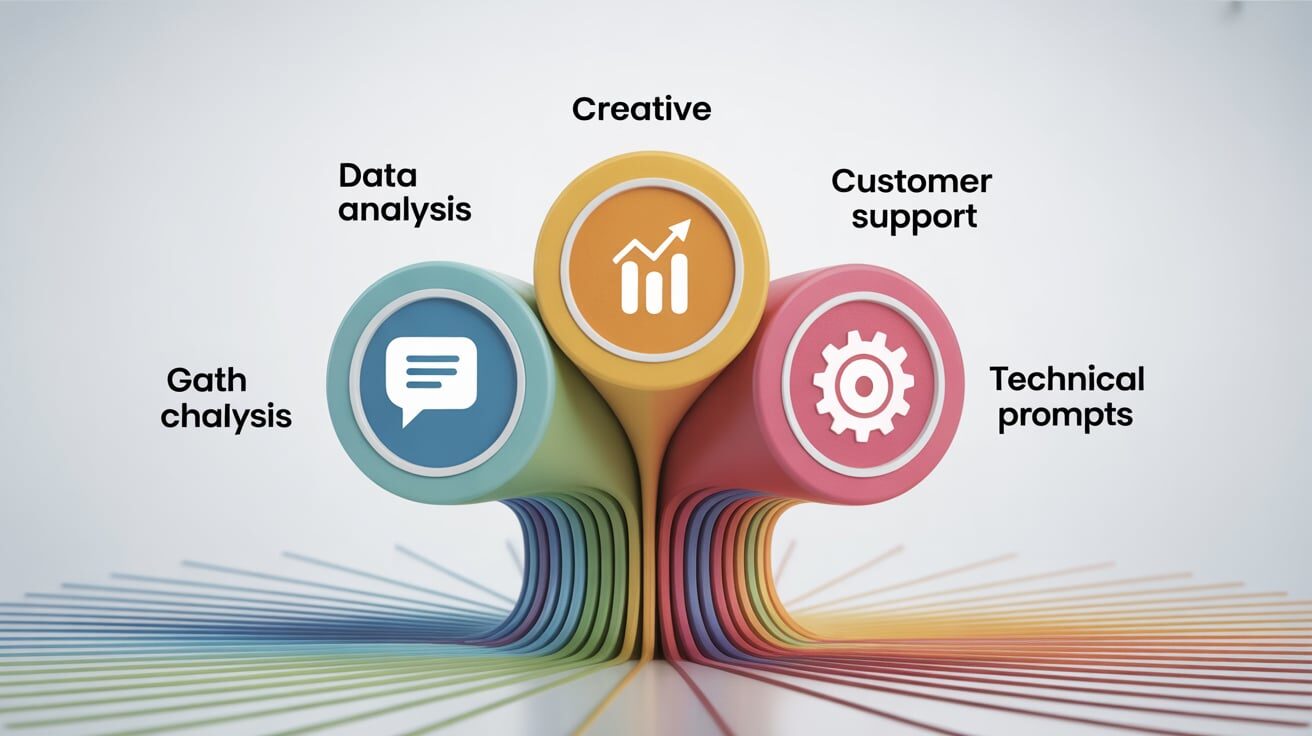
Infographic showing four main Claude prompt categories and examples
Exploring the Claude Prompt Library: Your Ultimate Resource Hub
One of the biggest challenges for AI users is finding a reliable source of high-quality prompts. The Claude prompt library concept addresses this by providing a centralized repository of curated, tested prompts. These libraries save time and improve output relevance by offering prompts tailored to different industries and use cases.
Popular Claude prompt libraries vary in scope and access models. Some, like ClaudePromptHub, offer a mix of free and premium prompts regularly updated based on community feedback. Others, like PromptMaster, cater more to technical users with subscription plans providing access to customizable prompt templates.
When choosing a prompt library, consider:
Using prompt libraries is like having an expert prompt engineer at your fingertips, providing ready-to-use options that you can refine as needed.
Library Name | Focus Area | Access Type | Notable Features |
Claude Prompt Hub | General purpose | Free + Paid tiers | Regular updates, community-driven |
Prompt Master | Technical & coding | Subscription | Advanced customization options |
Creative Boost | Creative content | Free | User-submitted and peer-reviewed |
Table: Comparison of Top Claude Prompt Libraries
Leveraging Claude Prompt Generators: Automate & Customize
While prompt libraries provide ready-made options, Claude prompt generators take customization to the next level by automatically creating prompts based on user inputs. These generators allow users to specify parameters like tone, output length, target audience, and topic, then produce tailored prompts that can be immediately tested with Claude AI.
The biggest advantage of prompt generators is the diversity and speed they bring. Instead of manually crafting multiple prompts, users receive a variety of options to test, expanding the creative space and improving the likelihood of finding the perfect prompt.
Prompt generators also democratize prompt creation for users without deep AI expertise. By simplifying the input process, these tools empower more people to generate high-impact prompts without extensive trial-and-error.
Using a prompt generator usually involves these steps:
Effectiveness of Claude Prompt Types Across Use Cases
Prompt Type | Best Use Case | Output Quality | User Skill Level |
Directive Prompts | Clear, task-focused jobs | High | Beginner to Intermediate |
Exploratory Prompts | Ideation and creativity | Medium to High | Intermediate to Advanced |
Contextual Prompts | Multi-step, complex tasks | Very High | Advanced |
Top Tools and Resources for Claude Prompt Users
To maximize your Claude prompt efficiency, these tools and communities are invaluable:
This process enables iterative prompt improvement, leading to smarter AI outputs over time.
Crafting High-Impact Claude Prompts: Best Practices
To maximize the effectiveness of Claude prompts, crafting them thoughtfully is crucial. High-impact prompts have several defining characteristics, including clarity, specificity, and context richness.
First, clarity is paramount. A well-written prompt clearly states the task, expected output, and any necessary guidelines. For example, instead of “Write about AI,” a better prompt would be “Write a 300-word blog introduction explaining the benefits of Claude AI for content creators.”
Specificity helps the AI focus on relevant information, reducing ambiguity. Including explicit instructions such as “Use a friendly tone” or “List three benefits” can guide the AI more effectively.
Context matters too. Providing background information or examples within the prompt helps Claude generate responses that are aligned with user expectations. For example, supplying a short paragraph or data snippet for summarization leads to more accurate outputs.
Avoid common pitfalls like vague language or overly broad instructions that confuse the AI and yield irrelevant answers. Always test prompts iteratively—modify and refine based on the responses until the outputs consistently meet your goals.
Additionally, embedding examples inside prompts can serve as anchors for AI behavior, especially for creative or technical writing.
Over time, prompt crafting becomes an evolving skill, with successful users developing a mental toolkit of structures and phrases proven to work well with Claude AI.
Case Studies: How Top Content Creators Use Claude Prompts for Smarter AI Outputs
Real-world examples are invaluable in illustrating the power of Claude prompts. Consider a tech blogging team that integrated structured Claude prompts into their content production workflow. By designing prompts that generate article outlines, introductions, and section summaries, they increased output by 50% while maintaining editorial quality. The structured prompts ensured consistent brand voice and topical relevance, reducing editing time significantly.
In another case, a SaaS company deployed Claude-powered chatbots using customized customer support prompts. This reduced incoming support tickets by 30% as the AI handled common queries with accuracy and empathy, freeing human agents to tackle complex issues. Prompt design focused on tone calibration, FAQs, and escalation triggers.
Both case studies show measurable productivity gains and highlight how targeted prompt strategies lead to smarter, more reliable AI outputs.
Trusting Claude Prompts for Your Projects
In any AI implementation for Claude prompts, this means relying on hands-on knowledge, expert-crafted templates, and transparent methodologies.
Experience comes from continuous prompt testing and refinement in real applications. Expertise is demonstrated by using prompts designed by industry professionals or AI researchers. Authoritativeness is built by sourcing prompts from reputable libraries or platforms with positive user feedback.
Transparency includes explaining how prompts are developed and their intended use cases, which fosters user confidence. Citing Anthropic’s official guidelines and peer-reviewed research on prompt engineering further reinforces trust.
Users can ensure their Claude prompts produce reliable, relevant, and safe AI outputs.
Conclusion: Take Action to Elevate Your AI with Top Claude Prompts
Claude prompts are transformative tools that enable smarter, more tailored AI outputs across multiple domains. By leveraging prompt libraries, generators, and applying best practices in prompt crafting, users unlock unprecedented productivity and relevance in AI interactions.
The journey toward mastering Claude prompts may seem daunting at first, but with structured resources and real-world insights, it becomes an achievable and rewarding endeavor.
Explore prompt libraries, experiment with generators, and continually refine your prompts to make the most of Claude AI. Your smarter AI outputs await.
Frequently Asked Questions on Claude Prompts
What are Claude AI prompts, and how do they work?
Claude AI prompts are carefully designed instructions that guide the Claude AI model to generate specific, relevant responses based on the user’s input and context.
How can a Claude prompt generator improve my content creation?
Prompt generators automate the creation of diverse, customized prompts, saving time and expanding creative possibilities, leading to higher quality AI outputs.
Where can I find a reliable Claude prompt library?
Reputable libraries like ClaudePromptHub and PromptMaster offer curated, regularly updated prompts suitable for a variety of applications.
What makes Claude prompts different from other AI prompts?
Claude prompts leverage Anthropic’s advanced architecture emphasizing safety, context understanding, and user intent, resulting in more precise and trustworthy outputs.
How do I customize Claude prompts for my specific needs?
By using prompt generators, adding detailed instructions, and iteratively testing and refining prompts, users can tailor Claude prompts effectively.
Are Claude prompts suitable for technical and creative tasks?
Yes, Claude prompts are versatile and highly effective across a broad range of tasks, from coding and technical writing to creative storytelling and marketing.

Robert Martin is a passionate blogger and versatile content creator exploring the intersections of personal finance, technology, lifestyle, and culture. With a strong background in financial literacy and entrepreneurship, he helps readers make smarter money moves, build sustainable side hustles, and achieve financial independence.
Beyond finance, Robert shares his insights on home decor and gardening—offering practical ideas for creating beautiful, functional living spaces that inspire comfort and creativity. He also dives into the dynamic worlds of sports and celebrity news, blending entertainment with thoughtful commentary on trends that shape today’s pop culture.
From decoding the latest fintech innovations to spotlighting everyday success stories, Robert delivers content that’s informative, relatable, and actionable. His mission is to empower readers to live well-rounded, financially confident lives while staying inspired, informed, and ahead of the curve.