

Navigating the immense digital ocean of music available today to find the genuine best songs all the time is a challenge every passionate music lover faces. With millions of tracks at our fingertips, the promise of endless choice often leads to a paradox of overselection, making it difficult to find truly curated greatest hits of all time lists that offer more than just algorithmically generated popularity.
This article, crafted for dedicated music lovers and discerning collectors, cuts through that noise. It is a definitive, authoritative resource built not on fleeting trends but on a deep understanding of musical artistry, cultural impact, and enduring quality.
We have synthesized decades of critical acclaim, commercial performance, and musicological analysis to present you with a streaming guide to the greatest music of all time, allowing you to press play with confidence and immerse yourself in the songs that have truly shaped our world.
Key Takeaways
- Discover a meticulously curated selection of songs universally acknowledged as the most famous songs of all time across multiple genres and eras.
- Understand the multifaceted criteria—from compositional brilliance to cultural impact—that elevate a track from a hit to a timeless classic, one of the best musics of all time.
- Gain data-driven insights from credible industry charts, streaming statistics, and expert opinions that define what constitutes the most popular song of all time.
- Learn practical strategies for building, organizing, and expanding your own personal library of all time favorite songs.
- Get immediate access to stream these masterpieces with direct consideration for your preferred platform, turning reading into listening.
Table of Contents
The Alchemy of Auditory Immortality: Deconstructing a Timeless Classic
A song does not accidentally ascend to the pantheon of the greatest song ever written. This status is not merely conferred by robust sales figures or transient chart dominance; these are often the outcomes of its greatness, not the cause.
The construction of a timeless classic is a complex alchemy of several critical elements working in perfect harmony. It begins with an undeniable melodic hook—a sequence of notes so potent and perfectly arranged that it becomes ingrained in our collective consciousness. Consider the haunting, minimalist piano figure in Beethoven’s “Für Elise” or the soaring, optimistic guitar riff in The Beatles’ “Here Comes the Sun”; these are not just melodies but auditory signatures that transcend language and generation. This compositional brilliance provides the essential foundation.
Lyrical resonance forms the second pillar. The lyrics of a greatest song all time must articulate a universal human truth or emotion with such clarity, poetry, or raw honesty that it feels both deeply personal and eternally relatable. Whether it’s the cathartic heartbreak in Adele’s “Someone Like You,” the rebellious spirit in Bob Dylan’s “The Times They Are a-Changin’,” or the unbridled joy in Pharrell Williams’ “Happy,” these words give the melody its soul and meaning.
The third element is cultural impact—the song’s ability to define a moment in history, become an anthem for a movement, or dramatically influence the artistic direction of popular music. Finally, and most crucially, is endurance. A true classic possesses a sonic quality and emotional weight that feels as vital and fresh today as it did upon its release.
It does not sound “dated”; it sounds “timeless,” continuously discovering new audiences and contexts, securing its place not just in history, but in the present.
The Foundational Pillars: Exploring the Famous Old Songs That Built Modern Music
Long before the era of streaming and digital downloads, these tracks carved their legacy into the cultural bedrock through radio waves, jukeboxes, and vinyl records. These famous old songs are the essential pillars upon which modern music is built, each one a masterclass in songcraft that continues to resonate with profound power.
This era gifted us with the operatic rock spectacle of Queen’s “Bohemian Rhapsody,” a song that defied all conventional radio wisdom with its suite-like structure, blending balladry, opera, and hard rock into a cohesive and thrilling six-minute journey.
Its audacious creativity demonstrated that popular music could be both artistically ambitious and massively successful, a lesson that inspired countless future artists.
Similarly, the poetic and sharply critical lyrics of Bob Dylan’s “Like a Rolling Stone” shattered the perceived limitations of the pop single, transforming it from a simple love song into a vehicle for complex social commentary and narrative storytelling. The raw, energetic blueprint for rock and roll itself is perfectly encapsulated in Chuck Berry’s “Johnny B. Goode,” a track whose guitar riffs became the foundational language for every rock guitarist who followed.
Meanwhile, in the world of soul, Aretha Franklin’s seismic cover of “Respect” transformed a simple plea into a roaring anthem for civil rights and feminist empowerment, showcasing how a performance could imbue a song with entirely new, powerful meaning. These tracks are far more than mere entertainment; they are historical documents and artistic benchmarks, capturing the spirit of their time while speaking to themes of love, rebellion, identity, and justice that remain forever relevant.
A Deep Dive into Enduring Appeal: The “Bohemian Rhapsody” Case Study
Few songs in history demonstrate the principles of a timeless classic as comprehensively as Queen’s 1975 masterpiece, “Bohemian Rhapsody.” The track is a fascinating use case in artistic risk-taking. Initially, record executives were baffled by its length and unconventional structure, and radio stations were hesitant to play it.
However, the band’s sheer belief in their creation and a cleverly engineered promotional campaign forced it into the public ear. The public’s response was not just acceptance; it was adoration. The song’s genius lies in its fearless originality and breathtaking emotional range. It begins as a vulnerable piano ballad, ascends into a mock-operatic section filled with complex vocal harmonies, and then erupts into a cathartic hard rock finale before cooling down to a somber coda.
This journey allows every listener to project their own experiences and emotions onto it, making it feel both spectacularly grandiose and strangely intimate.
Its cultural endurance was further cemented by its iconic resurgence in the 1992 film Wayne’s World, which introduced the song and its signature head-banging moment to an entirely new generation.
Decades later, the biographical film of the same name propelled the track back to the top of global streaming charts, proving its immutable appeal. Today, it consistently features on every list of the top ten all time songs, and its streaming numbers are astronomical. “Bohemian Rhapsody” stands as irrefutable proof that authenticity and artistic vision, not formulaic writing, are the true pathways to creating a song for the ages.
The Architects of Earworms: Deconstructing the Most Well Known Pop Songs
Pop music, often dismissed as frivolous, is in fact a complex and demanding art form dedicated to the science of the perfect hook. It is the engine room of the charts, producing some of the most well known songs on the planet—tracks designed for immediacy and built on infectious melodies, innovative production, and often, captivating visual storytelling. Michael Jackson’s “Billie Jean” is the paradigm of pop perfection. Its introduction alone—that unmistakable four-four drum beat followed by the most iconic bassline in history—creates an instant and palpable tension.
The song’s hypnotic rhythm, Jackson’s unique vocal hiccups, and the groundbreaking music video, which broke racial barriers on MTV, set an entirely new standard for the music industry, merging sound and vision into a complete package of pop stardom.
Madonna, the quintessential pop innovator, used the genre as a vehicle for provocation and discourse. “Like a Prayer” merged pop sensibilities with gospel choir influences and religious imagery so controversial it sparked global debate and led to boycotts. This demonstrated that a pop song could be a cultural event, challenging societal norms and pushing boundaries.
The pop landscape continued to evolve with the arrival of vocal powerhouses like Whitney Houston, whose rendition of “I Will Always Love You” transformed a Dolly Parton country ballad into a global pop phenomenon on the back of arguably the most technically impressive and emotionally devastating vocal performance ever captured on record.
In the modern era, the genre-bending genius of Mark Ronson and Bruno Mars’ “Uptown Funk” captured the timeless joy of 70s and 80s funk and soul, proving that feel-good music, when executed with impeccable musicianship and production, is always in style. These songs are meticulously crafted artifacts that define the sound of their respective decades and remain the all time favorite music for millions.
The Anatomy of an Iconic Pop Song
| Song & Artist | Release Year | Defining Musical Hook | Enduring Cultural Impact & Legacy |
| “Billie Jean” – Michael Jackson | 1983 | The minimalist yet profound bassline by Louis Johnson. | Broke racial barriers on MTV, redefined the music video as an essential art form, and set the blueprint for modern pop stardom. |
| “Like a Prayer” – Madonna | 1989 | The integration of a gospel choir with dance-pop rhythms. | Sparked global religious and cultural debate, cementing pop music as a platform for provocative social commentary. |
| “Smells Like Teen Spirit” – Nirvana | 1991 | The dynamic shift from quiet verse to explosive, distorted chorus. | Became the anthem for “Generation X,” catapulted alternative rock into the mainstream, and defined the 90s grunge era. |
| “Uptown Funk” – Mark Ronson ft. Bruno Mars | 2014 | The punchy, modern retro-funk horn section and talk-box ad-libs. | Revived mainstream interest in funk and live instrumentation, dominating global charts for weeks and becoming a staple at celebrations. |
The Soundtrack of Rebellion: The Ascent of the Rock Anthem
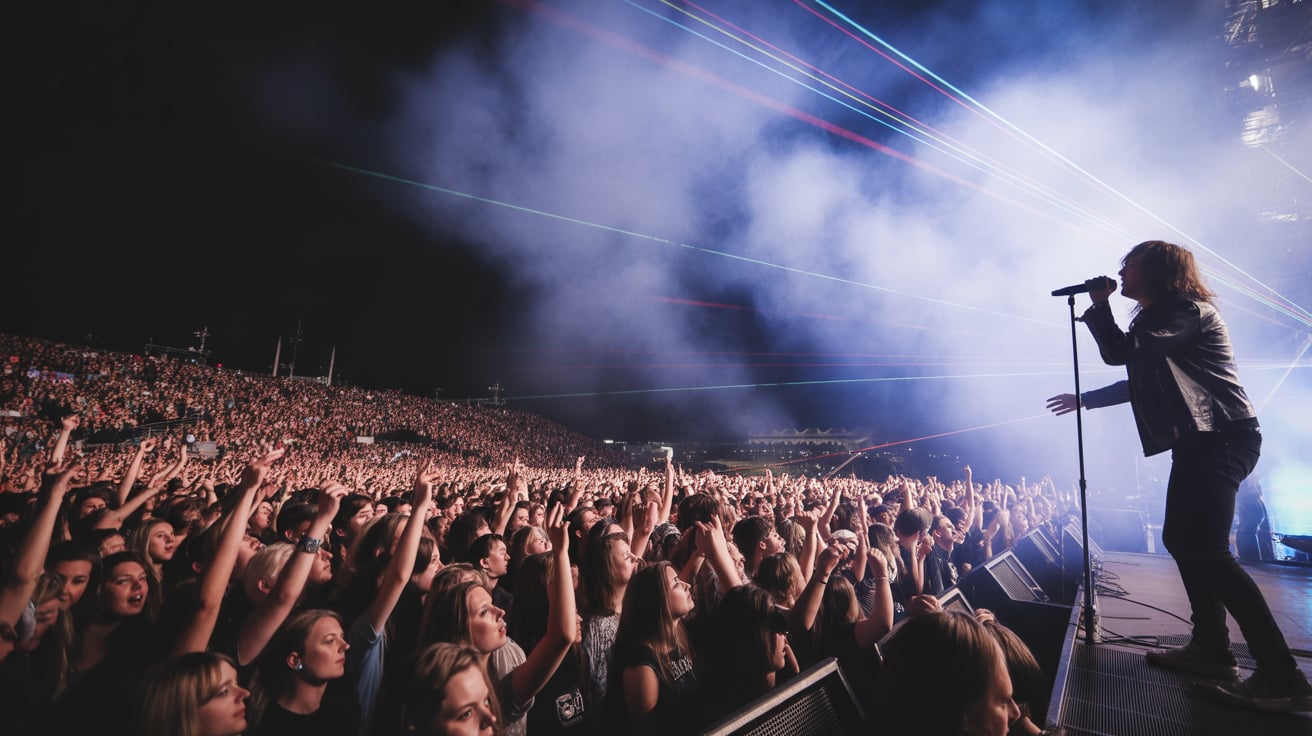
Rock music, at its core, is built on a foundation of rebellion, virtuosic instrumentation, and anthemic choruses designed to be shouted by thousands in unison. The passionate debate over the greatest song ever written within the rock genre is a perpetual one, but certain titles are invariably present, each representing a different facet of rock’s powerful essence. Led Zeppelin’s “Stairway to Heaven” remains the ultimate epic journey.
It begins as a gentle, acoustic medieval folk tale and gradually, meticulously, builds in intensity through John Bonham’s powerful drumming and John Paul Jones’s melodic bass lines, culminating in one of the most iconic and blistering guitar solos ever performed by Jimmy Page. It is a masterclass in dynamics and narrative storytelling through music.
In contrast, The Beatles’ “Hey Jude” achieves its anthemic status through sheer, uplifting simplicity and communal spirit. What begins as a comforting piano ballad evolves into a lengthy, cathartic coda of “na-na-na-na” that invites everyone to sing along, breaking down the barrier between performer and audience. The Eagles’ “Hotel California,” however, offers a different kind of masterpiece: a dark, allegorical tale of California excess and illusion, adorned with one of the most iconic and beautifully intertwined dual-guitar solos in history, performed by Don Felder and Joe Walsh.
These tracks represent the pinnacle of rock’s ambition, serving as the greatest hits ever from artists who used the format to explore complex themes, showcase instrumental prowess, and create shared experiences of cathartic release.
The Rhythm of the Heart: The Soul and R&B Masterpieces
If rock music speaks to the spirit of rebellion, then soul and R&B speak directly to the heart. This is the realm of raw emotion, vocal prowess, and rhythmic sophistication—home to some of the greatest music of all time.
Here, technical skill is inseparable from emotional delivery. Marvin Gaye’s “What’s Going On” is a landmark recording in every sense. The title track from the 1971 album is a profound, socially conscious masterpiece that pushed against the Motown machinery to address war, poverty, and environmentalism.
Its lush, immersive soundscape, created by layered vocals (Gaye multi-tracked his own voice), jazz-influenced percussion, and melodic basslines, creates a feeling of being enveloped in a warm, yet concerned, embrace.
Stevie Wonder, in his “classic period,” produced a string of albums that represent a peak in popular music. “Superstition” is a masterclass in funk-infused R&B, driven by an unforgettable and gritty clavinet riff played by Wonder himself. The song’s message, warning against the dangers of believing in superstitions, is delivered with an irrepressible energy that makes it instantly danceable.
The smooth, sensual, and complex harmonies of groups like The Temptations are exemplified in “Papa Was a Rollin’ Stone.” Over a sprawling, cinematic arrangement by the producer Norman Whitfield, the song tells a rich, melancholic story of a troubled father, supported by a hypnotic bassline and dramatic string sections.
These artists didn’t just perform songs; they bared their souls, creating a body of work that remains the all time favorite songs for those who seek depth, feeling, and unparalleled musicality in their listening experience.
Beyond the Canon: Discovering Underrated Gems Among the Greatest Hits
While the canon of the most recognisable songs is well-established and revered, any true music aficionado knows that history is filled with breathtaking tracks that, for various reasons, never achieved the same monolithic status. These are the deep cuts, the B-sides, and the cult classics that often represent an artist’s most daring and personal work.
Exploring these tracks is a rewarding journey that offers a deeper, more nuanced understanding of an artist’s catalog beyond their greatest hits of all time. For every “Smells Like Teen Spirit,” there is a “Where Did You Sleep Last Night” from Nirvana’s MTV Unplugged session—a raw, harrowing performance where Kurt Cobain’s vocal delivery transcends singing and becomes a visceral, haunting expression of pain that is arguably more powerful than any of their radio hits.
The haunting, ethereal beauty of Jeff Buckley’s cover of “Hallelujah” has, in many ways, surpassed Leonard Cohen’s original in the public consciousness, becoming a modern standard precisely because of its breathtaking and emotionally devastating vocal performance.
Meanwhile, the intricate jazz-rock fusion of Steely Dan’s “Aja” represents a level of studio perfectionism, complex composition, and musical sophistication that is rarely attempted in popular music, appealing to listeners who appreciate technical mastery. These songs may not be the most known song in the world, but they often hold the key to a more profound connection with music, offering discoveries that feel personal and uniquely yours.
They are the one of the best songs ever that you can proudly share with fellow collectors.
By The Numbers: The Data Behind the Most Popular Song of All Time
In the 21st century, the debate over the most popular song of all time is no longer purely subjective or anecdotal. We now have vast, quantifiable troves of data from streaming services, digital sales, and video platforms that allow us to measure popularity and consumption with unprecedented precision.
While traditional metrics like radio airplay and physical sales remain important historical indicators, streaming numbers offer a dynamic, real-time, and global picture of what the world is listening to. According to platforms like Spotify and Apple Music, contemporary artists like The Weeknd (“Blinding Lights”), Ed Sheeran (“Shape of You”), and Post Malone (“Sunflower”) have accumulated billions of streams, demonstrating massive viral popularity.
However, a significant caveat exists: raw streaming numbers inherently favor recent releases due to the exponential growth in the number of streaming service subscribers over time. A song released in 2020 has a much larger potential audience than one released in 1970.
Therefore, a more holistic and equitable view of “popularity” must incorporate longevity and consistency. This is where curated lists like Billboard’s “Greatest of All Time” charts are valuable, as they weigh chart performance across multiple decades.
Furthermore, other metrics like the most requested song of all time on radio—a title often claimed by Lynyrd Skynyrd’s “Free Bird”—or the most covered song of all time (The Beatles’ “Yesterday” is a strong contender) are powerful indicators of a song’s enduring impact and deep cultural permeation beyond passive consumption.
Quantifying Musical Impact Through Different Metrics
| Metric of Success | Song & Artist | The Number | What This Metric Truly Signifies |
| Most Streamed on Spotify (Current) | “Blinding Lights” – The Weeknd | Over 4 Billion streams | Unprecedented modern viral popularity and playlist dominance in the streaming era. |
| Most Covered Song (Claimed) | “Yesterday” – The Beatles | Over 2,200 recorded versions | Unmatched melodic and lyrical appeal to other musicians, indicating songwriting perfection. |
| Best-Selling Physical Single | “Candle in the Wind 1997” – Elton John | Over 33 million copies | A unique, event-driven cultural moment (the death of Princess Diana) captured in music. |
| Longest-Charting Billboard Hot 100 Hit | “Radioactive” – Imagine Dragons | 87 weeks on the chart | Exceptional staying power and recurrent popularity on modern radio and streaming. |
Crafting Your Personal Anthology: How to Build Your Ultimate Playlist
AI Image Prompt: Lifestyle shot of a person’s hands using a smartphone to browse a music streaming app, with stylish headphones lying on a wooden table next to a coffee cup, creating a modern, cozy aesthetic.
Creating a personal collection of your all time favorite songs is one of the most rewarding and ongoing projects for a music lover. It is more than just adding songs to a digital list; it is about actively curating the soundtrack of your life, crafting a narrative that reflects your unique musical journey and taste.
The process should begin introspectively by mining your own memory and emotional responses. What are the songs that instantly transport you to a specific time, place, or feeling? These emotional anchors, whether from your childhood, adolescence, or last month, form the indispensable core of your list. They are your personal greatest hits ever.
Next, you must diversify your discovery sources. Do not rely solely on algorithm-generated playlists, which can create a “filter bubble” of similar-sounding music. Actively explore the curated “Essentials” or “Iconic” playlists created by music editors on platforms like Spotify and Apple Music. Dive into the “Fans Also Like” and “Influenced By” sections on your favorite artist’s pages—this is a goldmine for tracing musical lineages.
Organization is paramount to enjoyment. A monolithic playlist of 500+ songs can become unwieldy and lose its narrative flow. Consider creating a system of sub-playlists organized by genre (“Timeless Rock Anthology”), mood (“90s Nostalgia Drive”), activity (“Focused Listening”), or even era (“1985-1989”). Most importantly, treat your playlist as a living document. Your tastes will evolve, and you will constantly discover new (old) favorites. Schedule time to revisit and refine your lists, pruning tracks that no longer resonate and adding new discoveries.
This mindful, curated approach ensures your personal ” top 1000 songs of all time” collection remains a true, dynamic, and joyful reflection of your unique auditory identity.
Conclusion: The Never-Ending Conversation of Greatness
The quest to identify and enjoy the best songs all the time is a beautiful, subjective, and never-ending conversation about art, memory, and shared human culture. It is a dialogue that spans generations and genres, connecting us through the universal language of music.
From the foundational famous old songs of the mid-20th century that established the rules of popular music to the genre-defining iconic songs of the modern era that continue to break them, these tracks collectively form a rich, shared soundtrack to our lives. They provide comfort, energy, solace, and connection. While sales data, streaming numbers, and expert critical opinions provide valuable frameworks and guides, the ultimate “best” song is, and always will be, the one that speaks directly to your soul, evokes a powerful memory, or makes you feel profoundly understood.
This list is not an endpoint but a starting point—a curated launchpad for your own exploration. We encourage you to listen deeply to the stories these songs tell, appreciate the immense craftsmanship behind them, and let them lead you down rabbit holes to discover your next favorite artist. The entire history of recorded music is now at your fingertips—dive in with curiosity and passion.
Frequently Asked Questions
So, what is actually considered the best song of all time?
There is no single, universally official answer, as the definition of “best” is inherently subjective and blends artistic merit, cultural impact, and personal taste.
However, based on aggregated critical polls, historical significance, and enduring popularity, songs that consistently top professional lists include “Like a Rolling Stone” by Bob Dylan, “Smells Like Teen Spirit” by Nirvana, “God Only Knows” by The Beach Boys, and “Respect” by Aretha Franklin. Publications like Rolling Stone have historically placed “Like a Rolling Stone” at #1 on their greatest song all time lists, praising its revolutionary impact.
What is widely regarded as the most requested song of all time on radio?
While comprehensive historical data is difficult to verify, one of the most consistently reported and legendary most requested songs across American radio is “Free Bird” by Lynyrd Skynyrd. Its epic length, emotional guitar solos, and themes of freedom have made it a perennial dedication for decades, often requested in memory of loved ones or as a classic rock anthem.
Where can I find a legitimate and well-researched top 1000 songs of all time list?
Reputable music publications undertake massive projects to create these lists. Rolling Stone’s “500 Greatest Songs of All Time” ( periodically updated) is a key reference, compiled from polls of hundreds of musicians, critics, and industry experts.
Similarly, NME’s “500 Greatest Songs of All Time” offers a more British-influenced perspective. These lists provide a well-rounded, expert-vetted overview of canonical works.
Are these famous old songs still relevant for streaming today, or are they just history?
They are not only relevant; they often dominate what is called “catalog streaming,” meaning music that is over 18 months old. The convenience of streaming platforms has dramatically increased listenership for classic artists.
Bands like The Beatles, Fleetwood Mac, and Queen consistently boast billions of streams, often rivaling and surpassing current hitmakers. This proves their timeless quality and introduces them to younger audiences more effectively than ever before.
What exactly defines an iconic song?
An iconic song is one that transcends its original context as a mere pop single to become a lasting and instantly recognizable part of the broader cultural lexicon. It’s a song that often defines a genre, an artist’s career, or an entire generation’s mood.
Key traits include a uniquely memorable melody (e.g., the opening of “Sweet Child O’ Mine”), profoundly resonant lyrics, a groundbreaking music video, and a demonstrable impact on other artists and the culture at large.
How can I find new music that fits with my love for these all-time favorite songs?
The best method is to use the deep features built into your streaming service. Instead of just listening to an artist’s top tracks, dive into their full albums and deep cuts. Explore the “Fans Also Like” and “Influenced By” sections on the pages of your favorite classic artists—this is how you find similar sounds.
Create a station based on a specific, less-known song you love (rather than a huge hit) for a more nuanced recommendation. Finally, follow curated playlists from trusted music blogs and publications that focus on specific eras or genres you enjoy.

Robert Martin is a passionate blogger and versatile content creator exploring the intersections of personal finance, technology, lifestyle, and culture. With a strong background in financial literacy and entrepreneurship, he helps readers make smarter money moves, build sustainable side hustles, and achieve financial independence.
Beyond finance, Robert shares his insights on home decor and gardening—offering practical ideas for creating beautiful, functional living spaces that inspire comfort and creativity. He also dives into the dynamic worlds of sports and celebrity news, blending entertainment with thoughtful commentary on trends that shape today’s pop culture.
From decoding the latest fintech innovations to spotlighting everyday success stories, Robert delivers content that’s informative, relatable, and actionable. His mission is to empower readers to live well-rounded, financially confident lives while staying inspired, informed, and ahead of the curve.