Introduction: The Immortals of the Arena
The quest to identify the most famous athletes of all time is a captivating, albeit perilous, endeavor. Fame is a mercurial and multifaceted concept, a tapestry woven from threads of unparalleled skill, seismic cultural impact, and an almost mythic personal narrative. It transcends mere statistics and championship rings. This article ventures to rank the individuals who became more than athletes; they became global icons, household names, and symbols of human potential.
We will delve into the stories of the greatest athletes of all time, exploring what propelled them from the sports pages to the forefront of the global consciousness, making them the most popular athletes and well known athletes in history. Our analysis is built on a foundation of historical context, measurable global impact, and enduring legacy, aiming to provide a authoritative and trustworthy perspective on this enduring debate.
Key Takeaways
- Athletic fame is a complex amalgam of dominance, cultural transcendence, and personal brand, extending far beyond win-loss records.
- The list features a diverse array of famous sports athletes from different eras and disciplines, highlighting global appeal over parochial success.
- Figures like Muhammad Ali and Michael Jordan redefined what it meant to be a famous sports player by building legacies beyond their sport, impacting commerce, social justice, and global culture.
- Modern athletes leverage digital media to amplify their fame, but enduring legacy is built over decades of consistent excellence and cultural relevance.
- This ranking is based on a holistic view of impact, weighing sporting achievement equally with global recognition and cultural footprint.
Table of Contents
Defining “Fame”: The Trifecta of Dominance, Culture, and Global Reach
To compile a list of the top athletes of all time, we must first deconstruct the very notion of fame. A high win-loss record or a cabinet full of trophies is a prerequisite, but it is not the sole determinant. True, enduring fame—the kind that etches a name into the annals of history—is built on a robust trifecta of pillars. First, Dominance: sheer, unassailable superiority within their sport that leaves contemporaries in the dust and forces a rewriting of the record books. This is the baseline qualification for any greatest sportsman of all time conversation.
Second, Cultural Transcendence: the athlete’s ability to break free from the confines of their game and influence fashion, politics, social norms, and popular entertainment. This is where an athlete becomes a symbol for something larger than themselves.
Finally, Global Recognition: a name and face that are instantly identifiable from Boston to Bangkok, even to those with no inherent interest in sports. This criteria, which considers media saturation, cross-border endorsement appeal, and simple name recognition, effectively separates the great players from the legendary greatest sports figures of all time. It is this holistic definition that guides our selection.
Our Methodology: A Rigorous Framework for Ranking Legends
Our methodology for ranking these famous athletes is intentionally holistic, designed to compare icons across different eras and sports with fairness and academic rigor. We have synthesized quantitative data with qualitative, cultural impact metrics to avoid a list that is purely subjective or coldly statistical. The key metrics in our analytical framework include:
- Championships and Records: The objective, measurable output of sporting success. This includes wins, titles, medals, and statistical records that demonstrate clear dominance over their peers.
- Global Reach and Recognition: An analysis of media coverage across decades, the magnitude and global nature of their endorsements, and sociological studies on name recognition across different continents and demographics.
- Cultural Impact and Legacy: A qualitative assessment of their influence on society, politics, and popular culture outside of sports. This includes their role as a fashion icon, a social activist, a film star, or a business mogul.
- Longevity and Narrative: The enduring power of their name and story long after retirement. This values a career of sustained excellence over a brief, bright flash of talent.
This multi-faceted approach allows us to credibly compare a boxer from the 1960s with a footballer from the 2020s on a level playing field, evaluating their respective claims to being among the top 10 athletes of all time based on a consistent set of principles that acknowledge the full spectrum of fame.
The Pantheon: A Detailed Look at the Top 10 Most Famous Athletes
10. Usain Bolt: The Charismatic Embodiment of Speed
Jamaican sprinter Usain Bolt didn’t just win races; he electrified the very fabric of track and field, transforming it into a global spectacle of joy and superhuman achievement. His unprecedented dominance is captured in his “triple-triple” – winning the 100m, 200m, and 4x100m relay at three consecutive Olympic Games (2008, 2012, 2016), a feat of consistency and power never before seen. However, his eight Olympic gold medals, while testament to his dominance, are only part of the story.
Bolt’s true claim to fame lies in his charismatic persona. His now-iconic “To Di World” pose, his pre-race swagger, and his joyful celebrations mid-race became as much a part of his brand as his world records. In a sport often plagued by tension and scandal, Bolt was a refreshing and magnetic force. He single-handedly elevated the profile of track and field, making it must-see television for millions who otherwise had no interest in the sport.
His ability to become the face of an entire discipline, and a moment of pure, unadulterated joy for the world, secures his place among the most famous athletes of all time. He demonstrated that while winning is crucial, how you win and the personality you project can resonate on a global scale, making him one of the most popular athletes of the modern era.
9. Babe Ruth: The Architect of Modern Sports Stardom
In the nascent era of mass media—radio, newspapers, and newsreels—George Herman “Babe” Ruth emerged not just as a baseball player, but as America’s first true sports superstar, effectively inventing the concept of athletic celebrity. His fame was built on a foundation of revolutionary power. Before Ruth, baseball was a game of “small ball,” focused on singles and steals. Ruth, with his prodigious, unprecedented home run power, changed the very strategy and appeal of the game. He didn’t just break records; he shattered them, at one point hitting more home runs than entire teams in the league. His 60 home runs in a 154-game season in 1927 stood as an unassailable record for 34 years.
But Ruth was more than statistics; he was a figure of myth. His colossal personality and off-field exploits—his enormous appetite for food, drink, and life—were as legendary as his baseball feats. He saved baseball from the disgrace of the 1919 Black Sox scandal and almost single-handedly built the New York Yankees into the most famous sports franchise in the world. For decades, he was the undisputed benchmark for all famous sports players, the original archetype of the athlete as a larger-than-life cultural titan whose influence extended far beyond the diamond.
8. Serena Williams: A Legacy of Power, Resilience, and Revolution
Serena Williams’s fame is a powerful and unignorable alloy of relentless sporting dominance and profound cultural significance, making her one of the most impactful famous sports athletes of the 21st century. With 23 Grand Slam singles titles, the most by any player in the Open Era, her on-court resume speaks to a longevity and supremacy that is virtually unparalleled. But her impact extends far beyond the baseline of a tennis court. Williams shattered barriers in a traditionally conservative and exclusive sport. As a powerful Black woman from Compton, California, she faced and overcame racism, sexism, and body-shaming, forcing the world of tennis to broaden its definition of a champion.
Her journey is a narrative of incredible comebacks: from serious illness and life-threatening childbirth complications to return to the top of her game. This resilience, coupled with her unwavering confidence and advocacy for women’s and mothers’ rights, transformed her into a global symbol of empowerment. She became a fashion icon, a venture capitalist focused on supporting underrepresented founders, and a vocal advocate for equality. Serena Williams is the epitome of a modern icon whose fame is deeply rooted in using her platform to challenge the status quo, inspiring millions beyond the world of sports and solidifying her status as one of the greatest sports figures of all time.
7. LeBron James: The Blueprint of the Modern Global Empire
LeBron James represents the modern apotheosis of athletic fame, a masterclass in building a 360-degree empire that encompasses unparalleled basketball excellence, shrewd business acumen, and potent social activism. His on-court achievements are the bedrock of his fame: four NBA championships, four MVP awards, and the title of the NBA’s all-time leading scorer. This longevity and consistent excellence place him firmly in the conversation for the greatest athletes of all time within his sport. But “The King’s” influence is vastly greater. From the moment he was dubbed “The Chosen One” on the cover of Sports Illustrated as a teenager, his narrative has been a public epic.
He leveraged this platform to make groundbreaking business moves, most notably with his lifetime deal with Nike and his production company, SpringHill Entertainment, which produces films and television shows that amplify diverse voices. Crucially, James has consistently used his voice for social justice, speaking out on issues of police brutality and voter suppression, and founding the “I PROMISE School” in his hometown of Akron, Ohio, which provides transformative support for at-risk children.
LeBron’s fame is not passive; it is actively managed and purpose-driven. He has created a blueprint for the modern athlete as not just an entertainer, but as a powerful CEO and community leader, ensuring his relevance and impact will endure for generations as one of the most successful athlete in the world in terms of holistic influence.
6. Michael Phelps: The Unquantifiable Standard of Olympic Success
When the discussion turns to pure, unadulterated Olympic achievement, the conversation begins and ends with Michael Phelps. His fame is built on a foundation of statistical absurdity that borders on the superhuman, making him the unequivocal choice for the most successful athlete in the world in the context of the Games. His haul of 28 Olympic medals, 23 of them gold, is so far beyond any other athlete in history that it defies belief. To put this in perspective, if Phelps were a country, he would rank tied for 40th on the all-time Olympic gold medal list, ahead of nations like Argentina and Ireland.
His dominance in the pool over four consecutive Olympic Games (2004-2016) is a feat of sustained excellence, rigorous discipline, and physiological rarity that may never be duplicated. Phelps transformed the sport of swimming, bringing it to a mainstream global audience every four years. His “Diet of Champions” and intense training regimens became the stuff of legend. While his fame may be less about a charismatic personality and more about his quantitative, medal-winning output, its sheer scale is what secures his place.
He is the ultimate symbol of Olympic dedication and success, a living benchmark against which all future Olympians will be measured, and a greatest sportsman of all time in his specific domain.
5. Diego Maradona
Diego Maradona’s fame was a potent, often chaotic, and always captivating mix of divine talent and profound human frailty. To millions, particularly in Argentina and Naples, Italy, he was not just a player; he was a deity, a symbol of defiance and hope.
His performance in the 1986 World Cup is the stuff of legend, perfectly encapsulating his entire persona. In a quarter-final match against England, he scored two of the most famous goals in history just four minutes apart: the first, a cunning, controversial handball that spoke to his street-smart cunning; the second, the “Goal of the Century,” an mesmerizing 60-meter dribble through six English players that showcased sublime, otherworldly skill.
He single-handedly carried Argentina to victory in that tournament. Later, he did the same for Napoli, a struggling club in Italy’s poor south, leading them to their first-ever Serie A titles against the wealthy northern powers. Maradona’s life was a public rollercoaster of addiction, health struggles, and political statements, which only amplified his fame from that of a mere famous sports player to a tragic, beloved, and endlessly discussed global myth.
He was a raw, unfiltered, and deeply human genius whose legacy is a complex tapestry of brilliance and brokenness, securing his place as one of the most well known athletes who ever lived.
4. Michael Jordan: The Alchemy of Excellence and Commerce
Michael Jordan is the archetype of the modern global sports icon, the standard against which all subsequent top athletes of all time are measured. His on-court resume is the foundational layer of his mythos: six NBA championships with two three-peats, five MVP awards, six Finals MVP awards, and a perfect record in the championship round. His competitive ferocity, known as “The Jordan Killer Instinct,” is the subject of countless stories and a key part of his legend. However, Jordan’s fame exploded into the stratosphere through his symbiotic and revolutionary relationship with Nike.
The Air Jordan brand, born from a seemingly risky partnership, didn’t just sell sneakers; it created a cultural artifact. The shoes, the “Jumpman” logo, and the marketing campaigns transcended sports, becoming integral to hip-hop culture and global fashion. His star turn in the film Space Jam fused the worlds of sports and entertainment for a new generation. Jordan became the first athlete to truly become a global marketing force of unprecedented scale, making “Be Like Mike” a universal aspiration.
His fame demonstrated the potent alchemy of unparalleled excellence, a compelling (if carefully guarded) personality, and visionary commercial strategy, creating a legacy that continues to print money and influence culture decades after his retirement.
3. Pelé: The Original Global Ambassador of Football
Before the era of satellite television and the internet, Edson Arantes do Nascimento—Pelé—was soccer’s first authentic world star, the man who embodied the term “the beautiful game.” His fame was built on a combination of precocious genius, breathtaking success, and an infectious love for football that beamed out to the world. He was a prodigy who won his first World Cup with Brazil in 1958 at just 17 years old. He would go on to win two more (1962, 1970), a record that stands to this day.
His playing style was a mesmerizing blend of grace, power, inventive flair, and audacious skill, including scoring spectacular goals from midfield and popularizing the bicycle kick.
More importantly, Pelé became the definitive ambassador for football at a time when the sport was solidifying its place as the world’s game. His tours with Santos club team were global events, often dubbed “The Pelé Show.” He played a key role in popularizing the sport in the United States when he joined the New York Cosmos late in his career. Unlike the more complicated figures who followed, Pelé was universally admired for his sportsmanship and joyful approach.
He was the first greatest sportsman of all time from a global team sport, a true international ambassador who brought joy to millions and defined excellence for generations of players and fans.
2. Muhammad Ali: The Athlete Who Shook the World
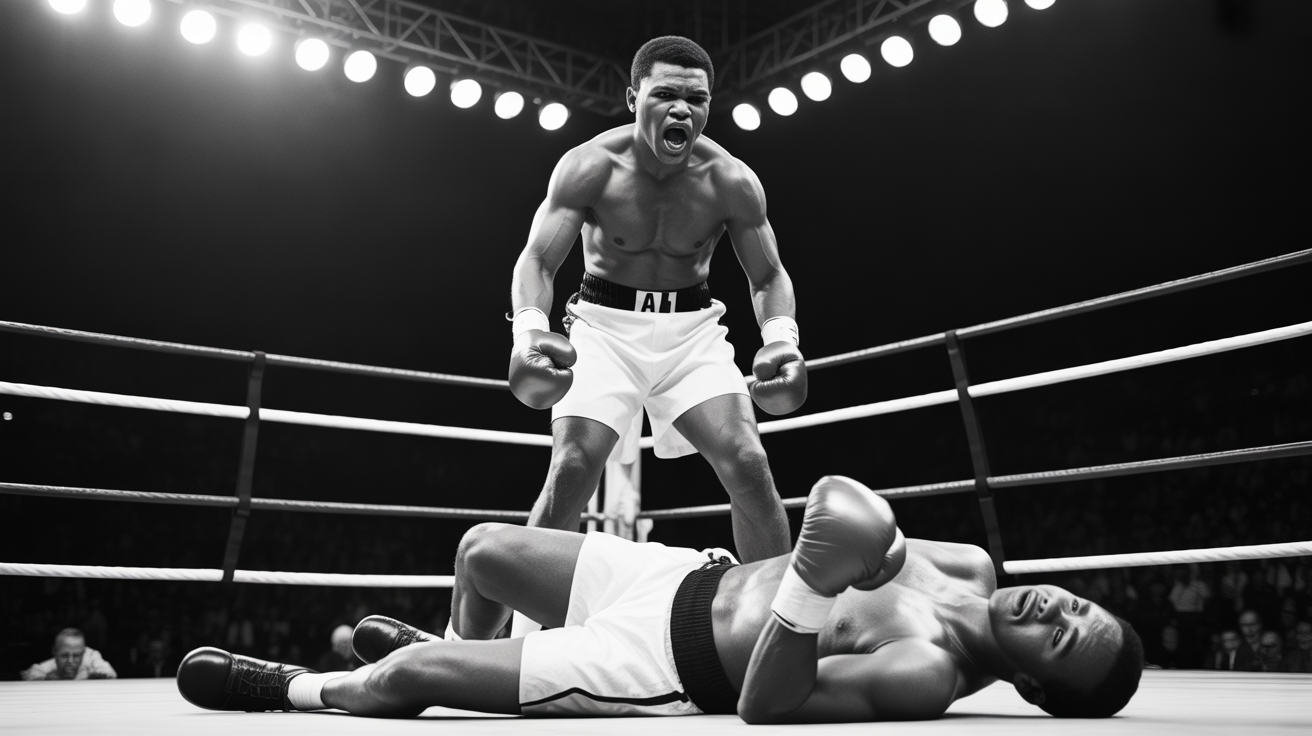
Muhammad Ali’s presence on this list is so monumental it must be acknowledged in two distinct acts. First, as the athlete. In the ring, he was a virtuoso, a combination of speed, power, and poetic movement that the world had never seen. He famously proclaimed, “Float like a butterfly, sting like a bee. The hands can’t hit what the eyes can’t see.”
This wasn’t just bravado; it was a precise description of his revolutionary style. He won the heavyweight championship an astonishing three times. His epic rivalries with Sonny Liston, Joe Frazier, and George Foreman are the bedrock of boxing legend and 20th-century sports history.
His athletic prowess—the “Ali Shuffle,” the “Rope-a-Dope” strategy against Foreman in Zaire—alone would make him a famous sports athlete of the highest order. He was the most beautiful and compelling fighter to ever step between the ropes, and his performances created a global audience for boxing that has rarely been matched. This chapter of his life established his platform, but it was the fusion of this talent with his out-of-the-ring persona that created an icon for the ages and the ultimate greatest sports figures of all time.
1. Muhammad Ali: The Champion of the People
Topping our list is Muhammad Ali, not just for the athlete he was, but for the courageous man he chose to be. Ali’s true and enduring fame lies in his principled stands outside the ring, which transformed him from a great athlete into a global symbol of conscience, resistance, and change. His refusal to be drafted for the Vietnam War (“I ain’t got no quarrel with them Viet Cong”) on religious and moral grounds saw him stripped of his title, banned from boxing, and facing five years in prison at the absolute peak of his athletic powers and earning potential.
This sacrifice, this unwavering commitment to his beliefs in the face of immense pressure and vitriol, elevated him beyond sports. He became a hero to the civil rights movement, a symbol of Black pride and resistance against an unjust establishment. He was a poet, a provocateur, and a prophet. Ali’s name resonates not merely because he was a boxer, but because he was a transformative figure who used his immense platform to fight for what he believed in, sacrificing everything in the process.
His later life, battling Parkinson’s disease with the same grace and humor he showed in the ring, only deepened the world’s affection for him. He is the ultimate example of an athlete whose fame is rooted in humanity, principle, and courage, making him the most famous and important most famous athletes of all time.
A Table of Titans: Comparing the Legends’ Claims to Fame
This table provides a concise snapshot of the key attributes that contribute to the enduring fame of our top five legends, illustrating the different paths to global icon status.
| Athlete | Primary Sport | Era | Key to Fame | Defining Quote/Moment |
| Muhammad Ali | Boxing | 1960s-70s | Social Activism & Skill | “I am the greatest!” / Refusing the draft |
| Pelé | Football (Soccer) | 1950s-70s | Joyful Ambassadorship | 3 World Cup Wins / The Beautiful Game |
| Michael Jordan | Basketball | 1980s-90s | Commercial Dominance | “The Shot” / Air Jordan Brand |
| Diego Maradona | Football (Soccer) | 1980s-90s | Flawed Genius | “Hand of God” & “Goal of the Century” (1986) |
| Usain Bolt | Track & Field | 2008-2016 | Charismatic Dominance | “To Di World” pose / 9.58s 100m World Record |
Beyond the List: The Legends Who Narrowly Missed
The pantheon of greatest sports figures of all time is incredibly crowded, and several legends who narrowly missed this top 10 list deserve immense recognition for their seismic worldwide impact. Tiger Woods revolutionized golf, shattering barriers of race and class to bring an unprecedented global audience and economic boom to the sport. His 1997 Masters win and subsequent “Tiger Slam” remain landmark moments in sporting history. Cristiano Ronaldo and Lionel Messi represent the two defining footballers of the modern social media era, with a combined following in the billions. Their two-decade-long rivalry pushed each other to superhuman statistical heights. Roger Federer epitomized grace, precision, and longevity in tennis, becoming a global ambassador for sportsmanship and excellence.
Finally, Jackie Robinson’s fame is rooted in world-historical significance; his courage in breaking baseball’s color barrier in 1947 made him a civil rights icon whose impact far exceeded his already-impressive on-field performance. Each of these famous sports players has a compelling argument for inclusion, demonstrating the incredible depth of talent and impact across the history of sports.
The Enduring Cultural Footprint: Why These Legends Never Fade
The legacies of these well known athletes are not preserved in dusty trophy cases; they are vibrant, living entities continuously woven into the fabric of our global culture. We literally see them on our feet in the form of Air Jordans. We hear their phrases in our everyday speech, borrowed from Ali’s poetic braggadocio. We witness their style of play emulated by new generations of children inspired by the footage of Pelé or Serena Williams. Their endurance is a product of powerful, universal narrative. They were not just winners; they were protagonists in epic, human stories of triumph against odds, devastating failure, stunning redemption, and social revolution.
They provided a shared experience, a common language of excellence and drama that connected people across geographical and cultural boundaries. They became reference points for greatness in any field. This cultural footprint—their ability to remain relevant and inspirational decades after their final game—is the ultimate testament to their status as the most famous athletes of all time.
Conclusion: The Eternal Legacies of the Immortals
Ranking the top 10 athletes of all time is ultimately a subjective exercise, designed more to celebrate the spectrum of greatness than to deliver a definitive, unassailable verdict. However, the names on this list share a common, powerful thread: they achieved a form of immortality that is rare in any field of human endeavor. They transcended their respective games, their races, and their nationalities to become universal symbols of something larger—be it power, grace, resistance, joy, or sheer human potential.
Their stories continue to be told, their highlights continue to be watched with awe, and their impact continues to be felt in how we view sports, celebrity, and activism. They are the true immortals of the arena, forever etched in the collective memory of humanity.
Frequently Asked Questions
Who is statistically the most successful athlete in the world?
In terms of Olympic medals, swimmer Michael Phelps is statistically the most successful, with a total of 28 medals, 23 of which are gold. This gives him a strong claim to the title based on pure, quantifiable achievement at the world’s biggest sporting event.
Are any current athletes considered among the top athletes of all time yet?
Absolutely. While legacy is often fully cemented after retirement, modern stars like LeBron James (basketball) and Lionel Messi (football) have built such monumental and global brands through a combination of longevity, sustained dominance, and cultural impact that they are already firmly in the conversation for the greatest athletes of all time.
How can you fairly compare famous sports athletes from different eras?
It requires a holistic, multi-faceted approach that considers context. We weigh their dominance relative to their peers and the technology of their time, their innovation within their sport, and crucially, their cultural impact given the media landscape available to them. Babe Ruth’s fame in the 1920s, achieved through radio and newspapers, was arguably more impactful relative to his era than a modern star’s fame in the social media age.
Why is Muhammad Ali almost universally ranked as the greatest sports figure?
Ali is ranked so highly because his impact was truly transcendent. He was a once-in-a-generation athlete who combined sublime skill with a powerful, principled, and costly stand on social and political issues. This fusion of athletic genius and moral courage made him a global icon of resistance and conviction, far beyond the boxing ring.
Which popular athletes are known primarily for their influence beyond sports?
Beyond those on this list, figures like Billie Jean King (for her groundbreaking advocacy for gender equality in sports and society) and Colin Kaepernick (for his peaceful protest against racial injustice) are famous sports players whose primary legacy is their profound impact on social and political discourse.
What is the key difference between a successful athlete and a truly famous one?
Success is measured in wins and medals. Fame is measured in cultural impact and recognition. A successful athlete wins games and breaks records. A famous athlete captures the world’s imagination through a unique story, a charismatic personality, and an ability to connect with people on a deep, emotional level that transcends their performance, making them a symbol for a broader idea or movement.

Robert Martin is a passionate blogger and versatile content creator exploring the intersections of personal finance, technology, lifestyle, and culture. With a strong background in financial literacy and entrepreneurship, he helps readers make smarter money moves, build sustainable side hustles, and achieve financial independence.
Beyond finance, Robert shares his insights on home decor and gardening—offering practical ideas for creating beautiful, functional living spaces that inspire comfort and creativity. He also dives into the dynamic worlds of sports and celebrity news, blending entertainment with thoughtful commentary on trends that shape today’s pop culture.
From decoding the latest fintech innovations to spotlighting everyday success stories, Robert delivers content that’s informative, relatable, and actionable. His mission is to empower readers to live well-rounded, financially confident lives while staying inspired, informed, and ahead of the curve.